.png)


Expertise areas
Welcome to my Expertise Areas page. It is a great opportunity to help you understand the context and background of my latest progress within the expertise areas and my smart learning goals.
Business & Entrepreneurship
The expertise area of Business & Entrepreneurship has always been a little bit more in the background for me. Even though I see the value and importance of this area, it was mostly not my focus area during the projects that I have done. Nevertheless, during the past four bachelor years of studying Industrial Design, I have gained a lot of knowledge, skills, and attitude within this expertise area.
With Introduction to Business Design, I first came into contact with this expertise area. I learned about developing business cases, using value propositions, and analysing market trends. Apart from the gained knowledge, I learned to use tools like creating a business model canvas, which I implemented multiple times in later projects.
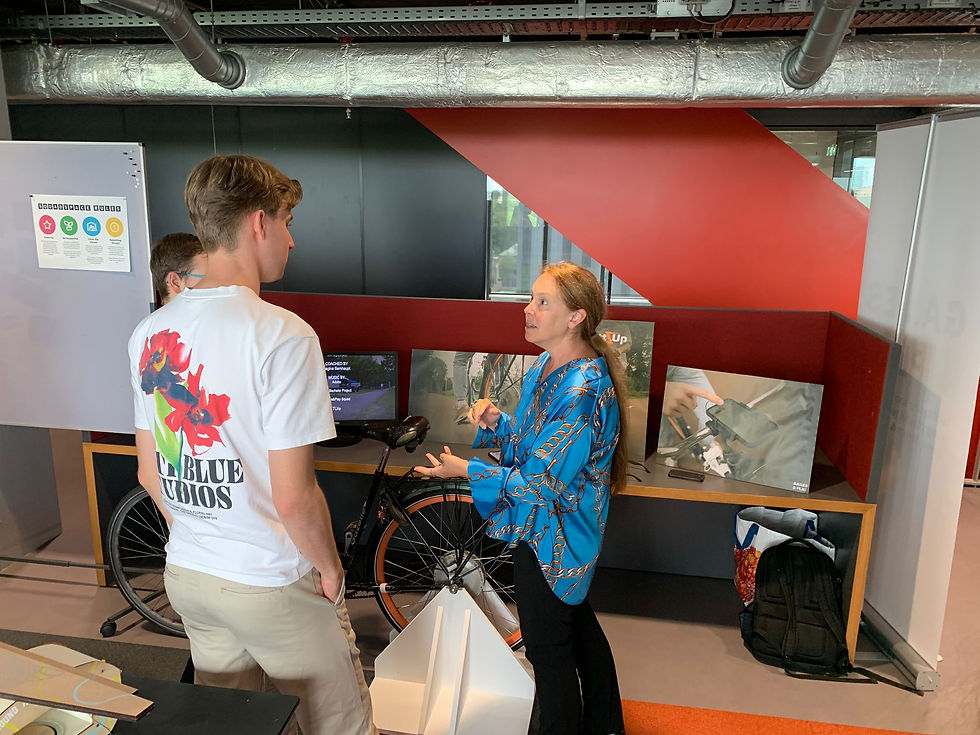
Furthermore, my internship with LEGO Education provided a lot of insight into how a business works within a large company. It became clear to me what the importance is of providing a good first impression to stakeholders, which is closely related to the expertise area of Creativity & Aesthetics to me. This is about creating nice visuals, posters, and being able to do elevator pitches. This all came together during my first project at the internship, where I was responsible for a product reveal during a partner conference.
During the Symposium event, together with my time in Billund, where I attended multiple LEGO Education partner conferences, I got in contact with networking and how to present myself professionally. This gave me a better understanding of the importance of getting to know new people with different expertise and backgrounds, which helped shape my professional identity and my attitude towards this expertise area. LinkedIn played a major role in maintaining contact with my network, where I have stayed in contact with several colleagues from the design department of LEGO Education, as well as the president of LEGO Education itself.
By benchmarking and talking to direct stakeholders like bike shops and bike repairers during my FBP, I came up with a business plan where I outbid the scrap metal dealers for repurposing the e-bike wheel hub motors instead of buying new, expensive ones. The product can therefore stay relatively cheap and is sustainable through recycling.


Creativity & Aesthetics
The expertise area of Creativity & Aesthetics has been more in the foreground for me. I see the value and importance of this area, and it closely links to my professional identity and vision. As a designer, I am visually oriented and find it important to create designs that have an aesthetically pleasing appearance with an intuitive interaction. This connects to my previous comments on the importance of providing a good first impression. During the past four bachelor years of studying Industrial Design, I have gained a lot of knowledge, skills, and attitude within this expertise area.
With Aesthetics of Interaction, I learned about what it is to implement intuitiveness and interaction affordances in a design. There are multiple ways of designing, but it will always be important to understand the affordances a design has to offer. This means understanding what the possibilities of the interaction between the user and a design are [1]. A designer can improve that interaction by using different types of feedforward and feedback. They both inform the user about the interaction possibilities before, after, and while the interaction is taking place. The relationship between these ways of providing feedback and feedforward can be analyzed and captured in a frogger framework [2]. I think that the intuitiveness of a design shows the quality or success of a design and enriches design in general, because there are so many more possibilities in designing when focusing less on the augmented information on a design. This links with my vision, since in today’s world, with improving technology and abstraction of information for use, the interaction between user and design function gets more and more indirect.
With Exploratory sketching, I mastered a skill for the exploration of an idea or design as well as the communication of it. The skill to sketch an idea relatively fast on paper is a skill that I have focused on a lot. I wanted to master it because it will help me communicate my ideas to others fast, and it will improve design processes. The course taught me that sketching fast is a key to a great sketch, and if I had to make a design proposal for a client in the future, I would not have much time. This changed my attitude towards this expertise area, because to quickly explore many ideas in a short amount of time, I must improve on this aspect by practicing my pace of sketching instead of only my quality of sketching.
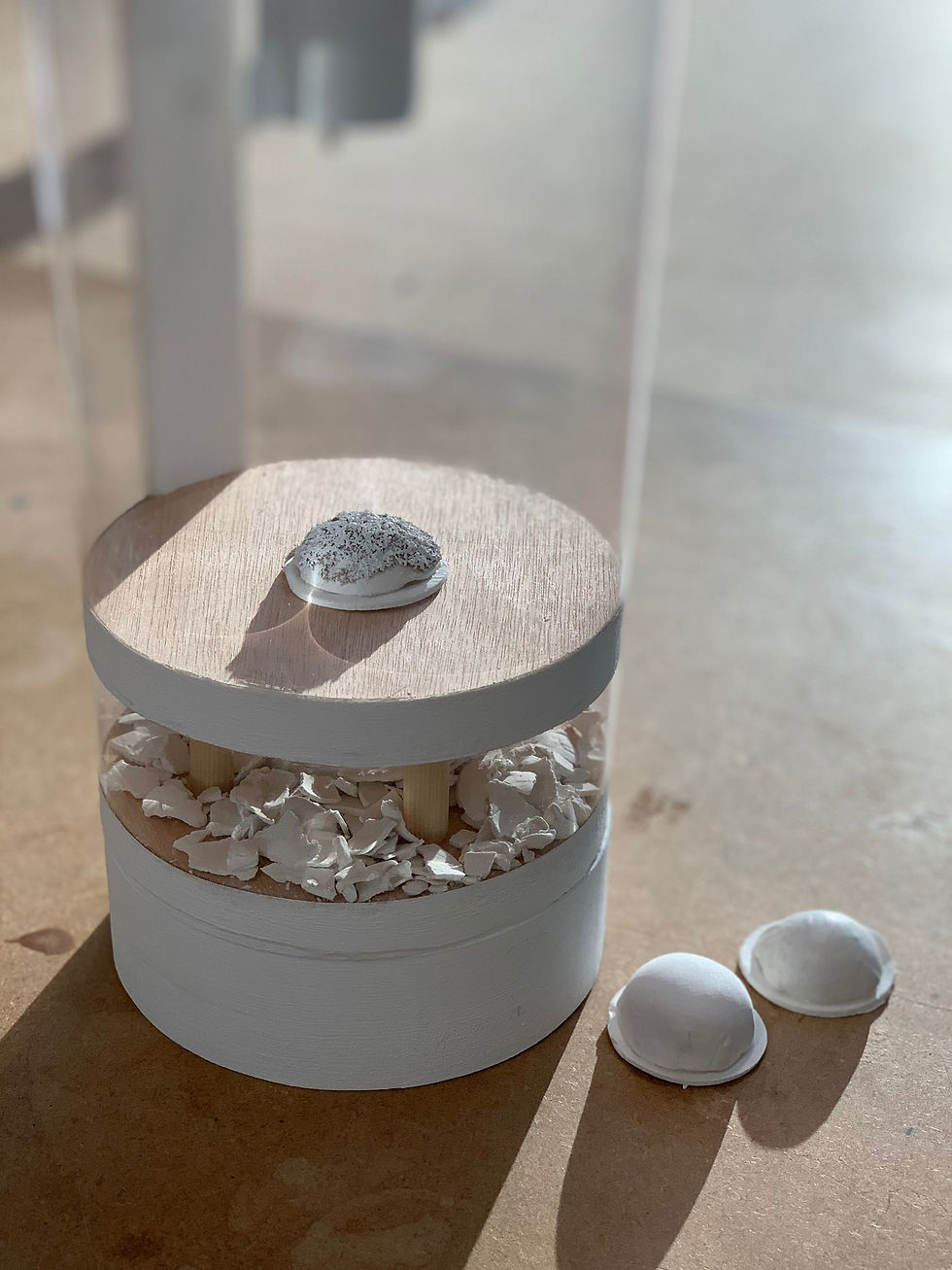
Project 2 taught me what it is like to design for a provocative aesthetic, with the shoes decaying exaggeratedly. I am glad that I have tried this other aspect within this expertise area, but I came to the conclusion that this is not something I want to continue doing for my FBP. By creating a modular, coherent design language for my FBP, I have tried to implement my skills, knowledge, and attitude within this expertise area.
[1] Victor Kaptelinin. 2014. Affordances. In The Encyclopedia of Human-Comuter Interaction (2nd ed.). Chapter 44. Retrieved from https://www.interaction-design.org/literature/book/the-encyclopedia-of-human-computer-interaction-2nd-ed/affordances
[2] S. A. G. Wensveen, J. P. Djajadiningrat, and C. J. Overbeeke. 2004. Interaction frogger: a design framework to couple action and function through feedback and feedforward. In Proceedings of the 5th conference on Designing interactive systems: processes, practices, methods, and techniques (DIS ’04), Association for Computing Machinery, New York, NY, USA, 177–184. DOI:https://doi.org/10.1145/1013115.1013140




math, data & computing
The expertise area of Math, Data & Computing has been more difficult for me. I totally see the value and importance of this area, but it was never my passion to focus on this during my projects. Nevertheless, during the past four bachelor years of studying Industrial Design, I have gained a lot of knowledge, skills, and attitude within this expertise area.
With Data Analytics for Engineers, I gained a lot of knowledge about processing data, large data sets, all kinds of plots, and analyzing them. Furthermore, it brought me more experience and skills with for example, Python coding to process these large data sets and creating plots to communicate the results.
Moreover, I learned coding with Processing and Arduino from Creative Programming and Creative Electronics, where I used mathematical structures to create static visual art, as well as an interactive, simple game. Even though this experience led me to try game design multiple times, I came to the conclusion that I do not only want to design for something that is only digital. Therefore, it shaped me as a designer because it made me realize I like to create physical-digital designs. I implemented this in my FBP by creating a companion app that functions as a digital twin.
During my FBP, I used a questionnaire to gather data from users to guide my deliverables to the needs of the target group. After analysis, I concluded that the application needed two separate features instead of one. This was done with the idea to capture a larger audience, because these features complemented each other well.
Lastly, tutoring the Calculus course for two years gave me more insight into the importance of math, since it is implemented as a basis in everything around us. This was also an important time for my development as a designer, since it shaped my vision more towards designing to teach, connect, and motivate people.


technology & realization
The expertise area of Math, Data & Computing has been the most important expertise area for me as a designer, since my goal in studying industrial design was to be able to go from idea, to concept to tangible prototypes. This expertise area is all about exploring, visualizing, creating, and demonstrating innovative concepts and experiences using appropriate technologies. Moreover, it is also about designing interactive systems and building prototypes. We, as designers, need to choose and integrate appropriate sensors and actuators, use object-oriented design, algorithms, circuits, and mechanisms. It is therefore also closely related to all the other expertise areas.
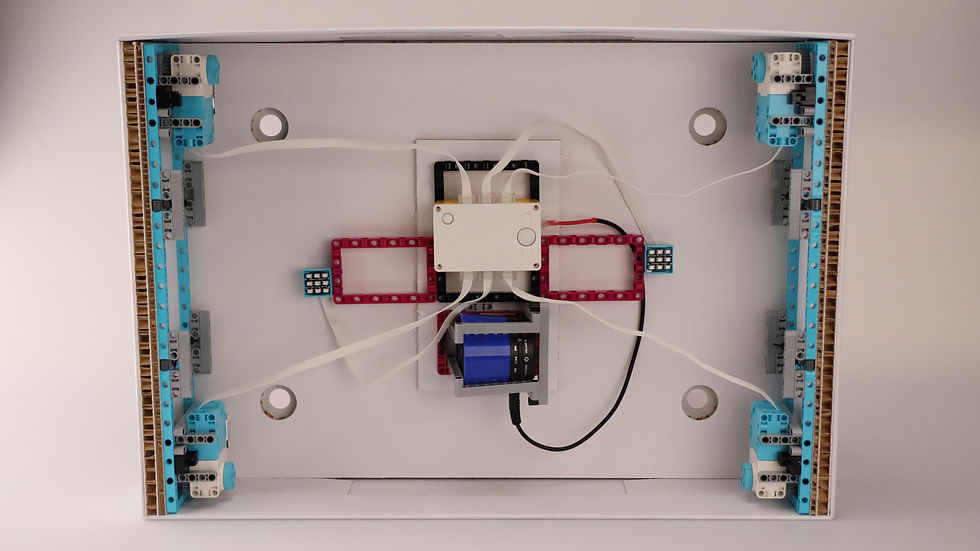
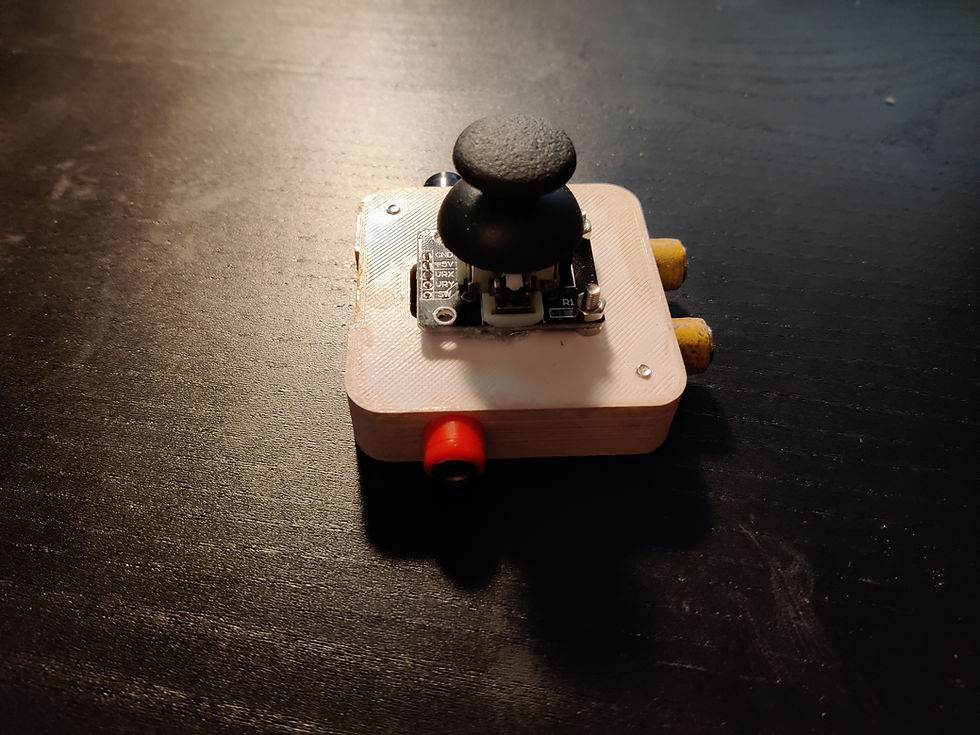
During the past four bachelor years of studying Industrial Design, I have gained a lot of knowledge, skills, and attitude within this expertise area. Creative Electronics brought me knowledge on electronics, coding, and using all kinds of sensors for interesting interactions.
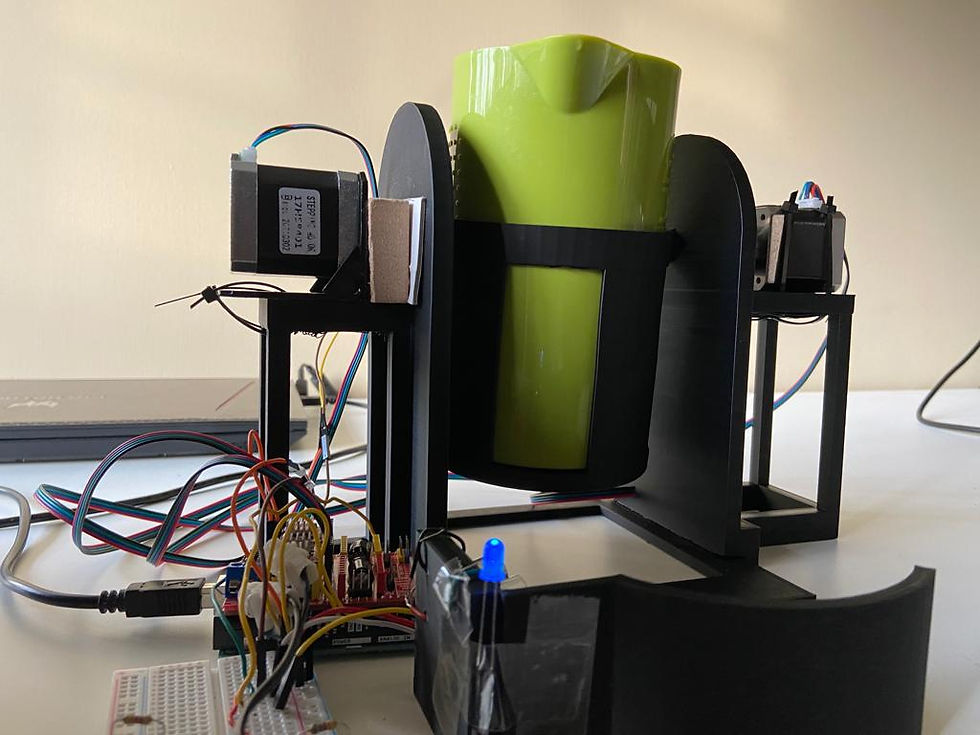
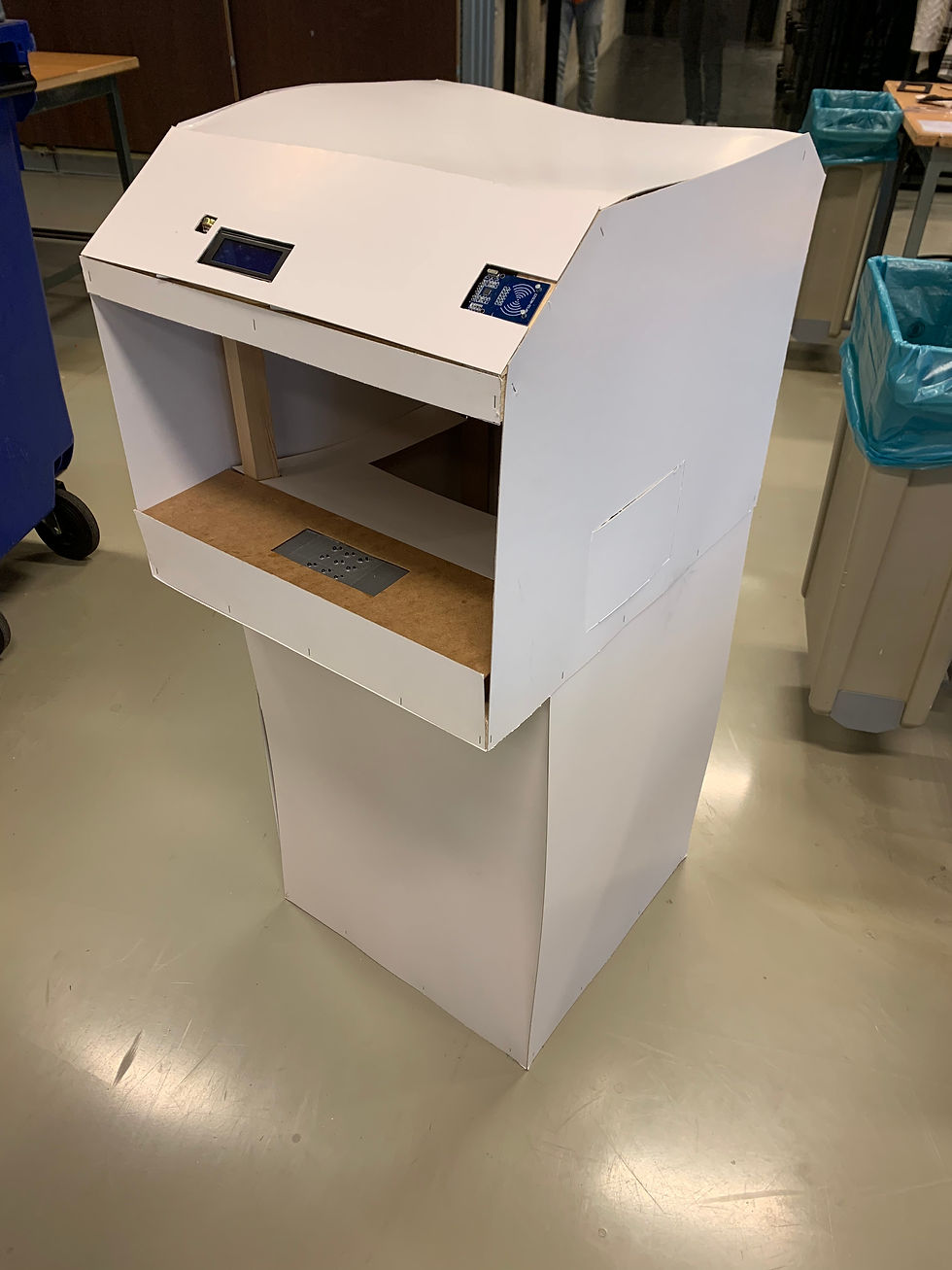
Moreover, even though Project 3 was a research project and not a design project, I took the opportunity to get comfortable with 3D modeling and 3D printing. This was a huge step for me since before, I mostly built prototypes and constructions out of wood in the Vertigo workshop. With 3D printing, I became more flexible in quickly designing more detailed prototypes, which was essential for me since I wanted to incorporate more electronics into my designs.
For my FBP, it was essential for me to have gained skills from 3D printing to woodworking to soldering electrical components. For me, as a designer, it is really important to be able to transform concepts and ideas from sketches into tangible prototypes. Therefore, I tried to possess a wide range of manufacturing techniques to create feasible and visually appealing products during the bachelor's courses and projects. This quickly became an important part of my professional identity.








user & society
The expertise area of User & Society is closely related to my vision as a designer since I am dedicated to incorporating aspects into my creations that contribute positively to individuals' lives or society in general. This expertise area is all about creating value for people and potentially directly impacts everyday life. To have a positive effect on the user experience, designers need to have basic awareness of psychology, think, for example, of perception, emotion, cognition, and sociology. During the past four bachelor years of studying Industrial Design, I have gained a lot of knowledge, skills, and attitude within this expertise area.
With the course User Centered Design, I learned that it is really useful to build personas for your designs in order to get more aware of what the user experience of your design should be. This course shaped my professional identity a lot, since central to my design vision is a commitment to prioritizing the needs and preferences of end-users. By involving the user in the design process, I want to ensure that the designs I create are intuitive, ergonomic, and can therefore seamlessly integrate into the users' lives.
During my USE courses on lighting, we created a calming lighting fixture designed to reduce stress for young adults, particularly those with mental health challenges. The prototype with hanging curtains creates a private, soothing space with light and color. User tests showed it helps with relaxation and well-being, highlighting potential for improving mental health environments. This whole process really made me big impact on me and my attitude within this expertise area, because it highlighted the importance of user testing, especially since we were designing for sensitive topics.
Lastly, during the course Design for Debate, we tried to design to address a big societal problem. This inspired me to do the same with my FBP, which led me to design for a more sustainable and energy-efficient living. Eventhough the project is not about trying to solve the world’s energy problems, it does aim to raise awareness and build better habits by offering a small but meaningful step towards personal energy independence.


